Creatine for Vegetarians and Vegans: What to Know
By The glow team Published 4 min read
The short answer: your body makes some creatine itself, but a large share of the creatine in a typical diet comes from meat. Vegetarian and vegan diets therefore provide little, and studies have found vegetarians have lower muscle creatine than meat eaters. Creatine monohydrate supplements can be vegan, but you need to check the label, and gummies in particular should be checked for gelatine.
This article is part of our complete guide to creatine for women.
Where creatine comes from
Creatine is a compound found in muscle. Your body makes it from amino acids, and you also take it in from food. A 2020 systematic review of creatine in vegetarians states that creatine is naturally found in most meat products, which is why vegetarians have reduced creatine stores.
Plants do not supply it in any useful amount, so a vegan diet has essentially no dietary creatine. Your body still makes its own creatine, so the question is whether a supplement changes your muscle stores, not whether you are unwell without one.
What studies in vegetarians have looked at
The 2020 review included nine studies of vegetarians who took creatine. Its authors report that:
- Supplementation increased total creatine, creatine and phosphocreatine in muscle, plasma and red blood cells, often to levels greater than in omnivores.
- It increased lean tissue mass and measures of strength and muscular endurance in vegetarian participants.
- It had no effect on brain phosphocreatine.
- Studies were mixed on whether vegetarians gained more than omnivores in exercise performance.
- The studies had moderate to high risk of bias.
The authors concluded that vegetarian athletes are likely to benefit from creatine supplementation. Note that the review was of athletes and active people, and mostly small studies, so it doesn't tell us what will happen for you.
A larger trial in 123 people, about half vegetarian and half omnivore, looked at thinking tests rather than muscle. It found that vegetarians did not benefit more than omnivores in that trial. A 2018 review of cognition studies had found vegetarians responding better than meat eaters on memory tasks, so the findings differ. We cover that research in creatine and the brain.
Is creatine monohydrate vegan
Creatine supplements are typically made by chemical synthesis, not extracted from animal tissue, which is why creatine monohydrate powder is widely sold as vegan. We haven't found an authority that confirms this for any particular product, so rely on the product's own label. Look for a clear "vegan" statement rather than assuming.
Checking a gummy for animal ingredients
The creatine itself is rarely the issue with gummies. The issue is what holds the gummy together. Many gummies use gelatine, which is made from animal collagen, and some use colourings or glazes from animal sources. When you compare gummies:
- Look for a "vegan" statement on the pack or product page.
- Check the ingredient list for gelatine.
- Check how many gummies make up a serving, and how much creatine that provides. Our guide to buying creatine gummies in the UK explains what to look for.
Do vegetarians and vegans need a different dose
We haven't found a published recommendation that vegetarians or vegans should take more or less than other adults. The studies in the 2020 review used a range of protocols. The ISSN position stand discusses a habitual intake of around 3g a day, and the GB creatine claims relate to a daily intake of 3g. See how much creatine a woman should take.
If you have a kidney condition, are pregnant or breastfeeding, or take medication, speak to your doctor before taking creatine. A dietitian can help with a plant-based diet more broadly.
glow Creatine Gummies
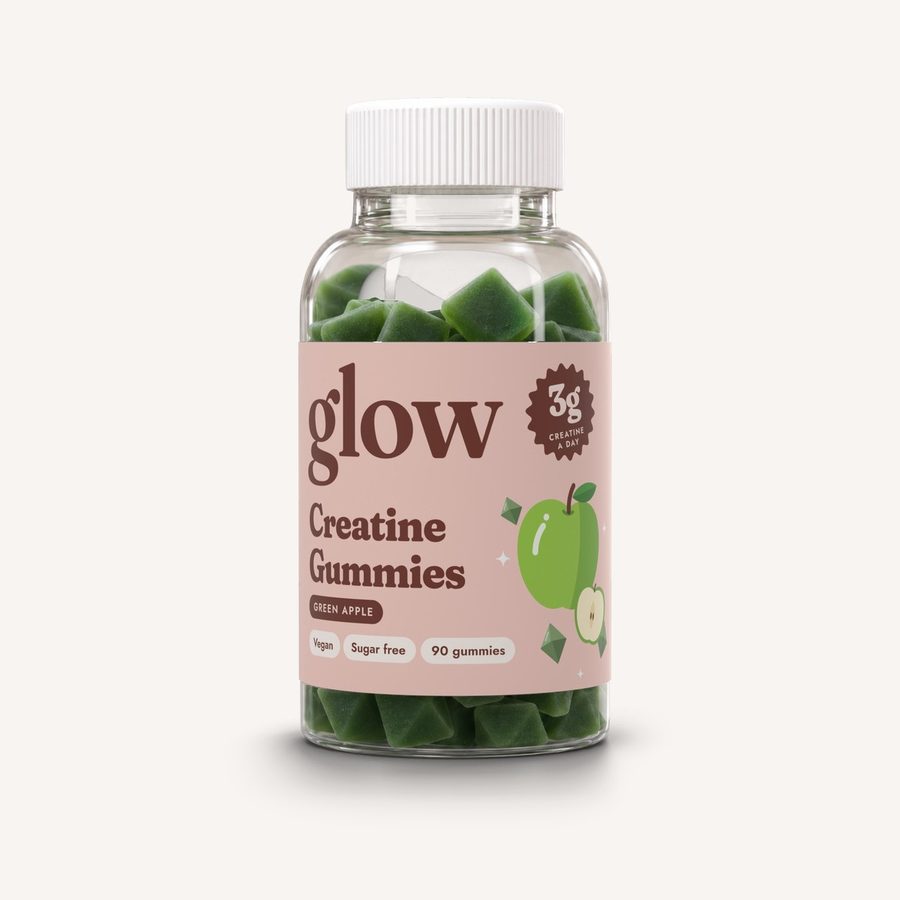
glow Creatine Gummies are vegan, sugar free and natural apple flavour, with 1,195mg creatine monohydrate per gummy, equivalent to 1,000mg creatine; three gummies give 3g of creatine, the daily amount the GB claims are based on. A pot of 90 lasts 30 days. Free UK delivery. Shop glow Creatine Gummies
The authorised GB claims for creatine are:
"Creatine increases physical performance in successive bursts of short-term, high intensity exercise. The beneficial effect is obtained with a daily intake of 3g of creatine."
"Daily creatine consumption can enhance the effect of resistance training on muscle strength in adults aged 55 and older. The beneficial effect is obtained with a daily intake of 3g of creatine in conjunction with resistance training."
For more on the ingredient, see creatine monohydrate explained.
FAQs
Do vegetarians have lower creatine?
Studies report that vegetarians have lower muscle creatine than meat eaters, because creatine is found in meat.
Is creatine vegan?
Creatine monohydrate is usually made synthetically and sold as vegan, but always check the individual product label.
Can vegans take creatine gummies?
Yes, if the gummy is vegan. Check for a vegan statement and look for gelatine in the ingredients.
Do vegetarians benefit more from creatine?
A 2020 review found supplementation raised muscle creatine in vegetarians, often above omnivore levels. Whether that means a bigger performance gain was mixed across studies.
Is there vegetarian creatine in food?
Creatine in food comes mainly from meat, so there is no meaningful plant source.
This article is for general information and is not medical advice. If you are pregnant, breastfeeding, have a kidney condition or take medication, speak to your doctor before taking a supplement.

glow Creatine Gummies
A full 3g of creatine a day in three green apple gummies. Vegan, sugar free, free UK delivery.
£24.95 a pot · about £0.83 a day
Shop Creatine GummiesKeep reading

