Creatine for Women Over 50 (and Over 40): What the Research Says
By The glow team Published 5 min read
The short answer: trials in postmenopausal women suggest creatine, taken daily alongside resistance training, may give small gains in lean mass and strength. Without training, and at low doses, the results are weaker, and the effect on bone density is unclear. One of the two GB-authorised creatine claims relates to resistance training in adults aged 55 and older, and we quote it in full below. The same product and dose are used at any age, as we explain in our complete guide to creatine for women.
Why women over 50 search for creatine
After menopause, women tend to lose muscle mass and strength faster. A 2021 review of creatine in women's health links the fall in oestrogen to age-related loss of muscle and bone, and that is why researchers have tested creatine in this group. Resistance training is the foundation, and the question is whether creatine adds anything to it.
What trials in postmenopausal women found
The most recent pooled analysis
A 2026 systematic review and meta-analysis looked at seven randomised, placebo-controlled trials with 608 postmenopausal women (average age about 62). Across the trials, the authors found:
- Lean mass was higher with creatine, by about 0.37kg on average (five trials).
- Leg press strength was higher by about 7.5kg (three trials).
- Benefits showed up when 5g or more a day was combined with resistance training. Trials using 3g or less a day without resistance training showed no measurable effect.
- Bone density was unchanged overall.
- Adverse events were mild and similar to placebo, and kidney measures did not change.
The authors call these gains small but meaningful, and note that most trials had "some concerns" about risk of bias. One author chairs a scientific advisory board supported by a creatine manufacturer, which also helped pay the publication fee.
The 2021 review
The women's health review above describes mixed results. Some trials in older women found larger gains in muscle and strength with creatine plus training, such as a 12-week trial using 5g a day in women around 65. Others found no extra benefit over training alone. It concludes that, when combined with resistance training, most of the research supports doses of 5g or more a day for muscle and strength in postmenopausal women. Two of its authors advise a creatine manufacturer.
Bone
The picture here is mixed, leaning towards no effect on bone density. A two-year trial of 237 postmenopausal women (average age 59) gave 0.14g of creatine per kg of body weight a day, alongside resistance training and walking. It found no effect on bone mineral density, no extra gain in strength and a small improvement in an 80m walking time. Creatine did maintain some measures of hip bone strength. Earlier, smaller trials had suggested more, so we would not say creatine is a bone treatment. That is a question for your doctor, not for a supplement label.
What the GB claim covers
The claim for adults aged 55 and older was assessed by the European Food Safety Authority. In its 2016 opinion, the panel found evidence for an effect on muscle strength in adults over 55 at doses of at least 3g a day, taken with regular resistance training three times a week of moderate intensity for several weeks. It saw no such effect when similar doses were given only on training days. The point to take away is that daily use alongside regular training is what the claim is built on.
Over 40 and perimenopause
Many women search for creatine in their forties. We did not find trials in perimenopausal women specifically, as most studies enrol postmenopausal women. That means the evidence for this stage is thin, and anyone who tells you otherwise is guessing. What applies to everyone is that strength training is worth doing, and our creatine and menopause article covers what has and hasn't been studied.
Dose: 3g or more?
Trials in postmenopausal women show a wide spread, from 1g a day (no effect) up to loading doses of about 20g a day. The International Society of Sports Nutrition (ISSN) describes 3 to 5g a day as the usual range. Be aware that most of the postmenopausal trials that found benefits used 5g a day or more, which is above the 3g a day the GB claims are based on. Our guide to how much creatine a woman should take explains how to read those numbers.
Creatine alone or with training
The ISSN review says creatine without exercise is unlikely to produce substantial strength gains in older adults, and it recommends combining creatine with resistance training. The NHS says adults aged 65 and over should do activities that improve strength, balance and flexibility on at least two days a week. If you're starting out, see strength training for women over 50.
Is it safe after 50
In healthy adults, the ISSN position stand found short and long-term use safe and well tolerated, and the 2026 meta-analysis found adverse events similar to placebo. Speak to your GP or pharmacist first if you take regular medication, have a kidney condition, or are due blood tests, since creatine can raise blood creatinine without harming your kidneys. See is creatine safe for women.
The same product at every age
Nothing about creatine is specific to a decade. A woman of 28 and a woman of 58 take the same creatine monohydrate. The research on older women is just where the strength and muscle questions are most pressing.
glow Creatine Gummies
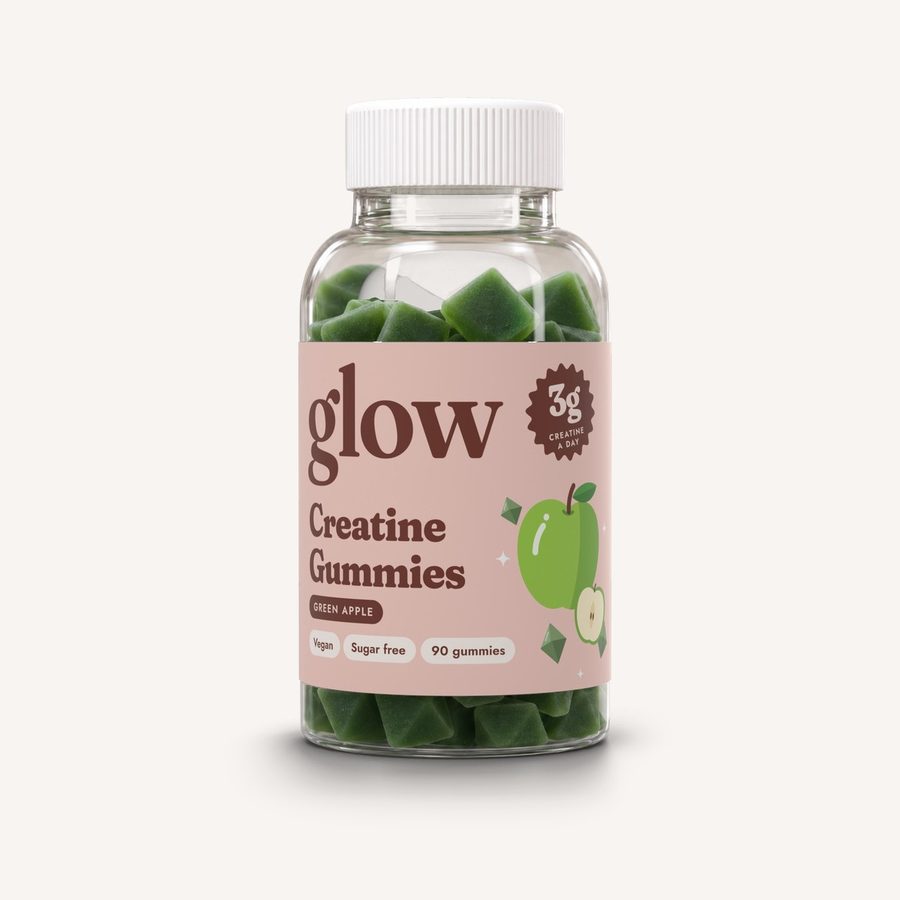
glow Creatine Gummies are natural apple gummies with 1,195mg creatine monohydrate per gummy, equivalent to 1,000mg creatine; three gummies give 3g of creatine, the daily amount the GB claims are based on. A pot holds 90 gummies, 30 days. They are vegan and sugar free, with free UK delivery and a 30-day money-back guarantee on first orders.
Daily creatine consumption can enhance the effect of resistance training on muscle strength in adults aged 55 and older. The beneficial effect is obtained with a daily intake of 3g of creatine in conjunction with resistance training.
FAQs
Is creatine good for women over 50?
Trials in postmenopausal women suggest small gains in lean mass and strength when creatine is taken daily with resistance training. The effect without training is weaker, and results for bone are mixed.
How much creatine should a woman over 50 take?
Studies use a range, and the ISSN describes 3 to 5g a day as the usual dose. The GB claim for adults aged 55 and older refers to 3g a day with resistance training.
Does creatine help with menopause symptoms?
There is no research showing that it does, so we don't suggest it. See creatine and menopause.
Can I take creatine with HRT or other medication?
We can't give drug-specific advice. Speak to your GP or pharmacist before starting if you take any regular medication.
Do I need to lift weights?
The evidence is strongest with resistance training. Walking and everyday movement are good for you, but they weren't the focus of the strength findings.
This article is for general information and is not medical advice. If you have a health condition, are pregnant or breastfeeding, or take medication, speak to your doctor before taking a supplement.

glow Creatine Gummies
A full 3g of creatine a day in three green apple gummies. Vegan, sugar free, free UK delivery.
£24.95 a pot · about £0.83 a day
Shop Creatine GummiesKeep reading

