Is Creatine Safe for Women Taking It Every Day for Years
By The glow team Updated 4 min read
The short answer: for healthy adults, the research says yes. The International Society of Sports Nutrition (ISSN) reviewed the evidence and concluded that short and long-term creatine use is safe and well tolerated in healthy people, including at doses far higher than anyone takes day to day. A 2021 review of creatine in women's health cites a systematic review that found no adverse effects on the stomach and gut, kidneys, liver or heart at recommended doses. Pregnancy, breastfeeding, kidney conditions and some medicines are the exceptions where you should speak to your doctor first.
This article is part of our complete guide to creatine for women.
Why creatine has a reputation problem
Creatine has been sold for decades in tubs with men on the front, next to protein powders and pre-workouts. That has left many women thinking it is only for bodybuilders, or that it is somehow risky.
Creatine is a compound your body already makes, and you also get some from meat and fish. Supplements add to what you already have.
What the research says about safety
The ISSN position stand, written by Richard Kreider and colleagues, is the most cited summary. It concludes that short and long-term supplementation is safe and well tolerated in healthy people and in a range of patient groups, at up to 30g a day for five years in some studies. It also says there is no compelling evidence that creatine harms kidney function in healthy or clinical populations.
For women specifically, the 2021 review Creatine Supplementation in Women's Health: A Lifespan Perspective cites a systematic review that found no adverse effects on the gastrointestinal, kidney, liver or cardiovascular systems at recommended doses. In trials in postmenopausal women, the authors report no more adverse effects with creatine than with placebo. That systematic review, a 2020 analysis of 29 studies with 951 female participants, found no deaths or serious adverse events, and no more adverse events, stomach and gut problems, weight gain or kidney and liver changes than placebo.
There is a caveat worth being honest about. The same review says creatine is understudied in women compared with men, and two of its authors advise a creatine manufacturer. The safety evidence is strong, but more research in women would be welcome.
Does creatine harm your kidneys
This is the most common worry. Creatine breaks down into a waste product called creatinine, and doctors use blood creatinine to estimate kidney function. A 2021 ISSN paper on common questions about creatine explains that taking creatine can raise blood creatinine, often within the normal range, without the kidneys being harmed. It concludes that creatine at recommended doses does not damage the kidneys in healthy people.
So there are two practical points:
- In healthy people, studies have not shown that creatine damages the kidneys.
- If you have a blood test, tell whoever orders it that you take creatine, so the result is read properly.
If you already have a kidney condition, or you take medicines that affect the kidneys, speak to your doctor before starting.
Common side effects
Most people notice nothing. When side effects are reported, they tend to be mild and linked to large single doses. The ISSN paper above notes that servings of more than 10g at once may cause stomach upset such as diarrhoea, which is why loading phases of 20g a day are usually split across the day. A steady daily amount avoids most of this, and you can read more in how much creatine a woman should take. For a plain list of what is common, rare and a myth, see creatine side effects.
Some people also notice a small rise on the scales in the first couple of weeks. That is water held in muscle, not fat, and we cover it in does creatine make you gain weight.
Who should speak to a doctor first
Check with your GP, pharmacist or midwife before taking creatine if you:
- are pregnant, trying to conceive or breastfeeding. The 2021 review found no human studies of creatine supplements in pregnancy, so the evidence is not there yet
- have a kidney condition, or take medicines that affect the kidneys
- have another long-term health condition or take regular prescription medicines
- are under 18
This is a good rule for any supplement. The NHS guidance on vitamins and minerals puts a varied and balanced diet first and warns against some supplements unless a doctor advises them.
What about creatine and hair loss
The worry comes from a single small study in men that did not measure hair. We look at it properly in does creatine cause hair loss in women.
Choosing a creatine
Look for creatine monohydrate, the form used in most of the research. Check the label shows how much creatine you get per serving, and how many gummies, capsules or scoops make up that serving.
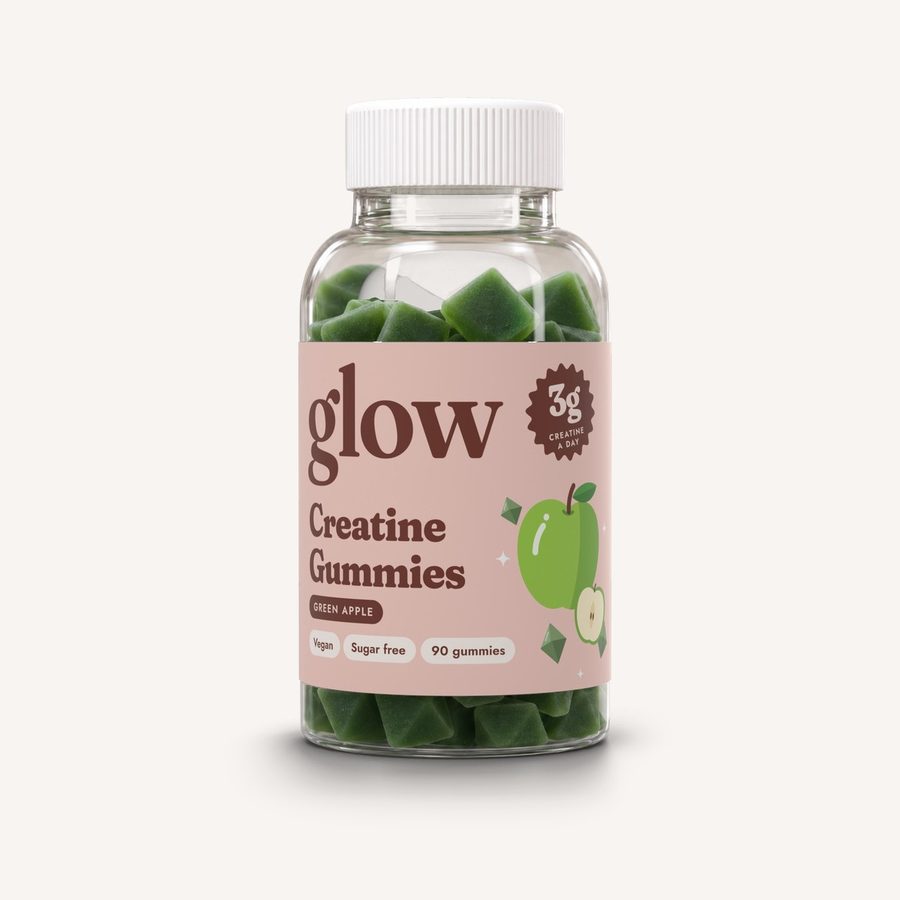
glow Creatine Gummies are apple gummies with 1,195mg creatine monohydrate per gummy, equivalent to 1,000mg creatine; three gummies give 3g of creatine, the daily amount the GB claims are based on. A pot holds 90 gummies, and they are vegan and sugar free. Free UK delivery.
Creatine increases physical performance in successive bursts of short-term, high intensity exercise. The beneficial effect is obtained with a daily intake of 3g of creatine.
FAQs
Is it safe to take creatine every day?
For healthy adults, the research supports it. Creatine is taken daily so that muscle stores stay topped up, and the ISSN reports studies lasting up to five years without serious harm.
Can creatine cause side effects in women?
Mild stomach upset can happen, mostly with large single doses. A small, temporary rise in body weight from water is also possible. Both are less likely with a steady daily amount.
Is creatine safe while breastfeeding?
There is not enough human research to say. Speak to your GP, midwife or health visitor before taking it.
Do I need to cycle creatine?
The research we reviewed does not suggest you need breaks. Studies look at steady daily use.
Is creatine a drug?
No. It is a compound made in your body and found in meat and fish, and it is sold as a food supplement.
More on creatine for women: the complete guide.
This article is for general information and is not medical advice. If you have a health condition or take medication, speak to your doctor before taking a supplement.

glow Creatine Gummies
A full 3g of creatine a day in three green apple gummies. Vegan, sugar free, free UK delivery.
£24.95 a pot · about £0.83 a day
Shop Creatine GummiesKeep reading

